The Golf Star Who Had Brain Surgery Then Won Again
By Final Putt · Sports · 261 views · 12:44
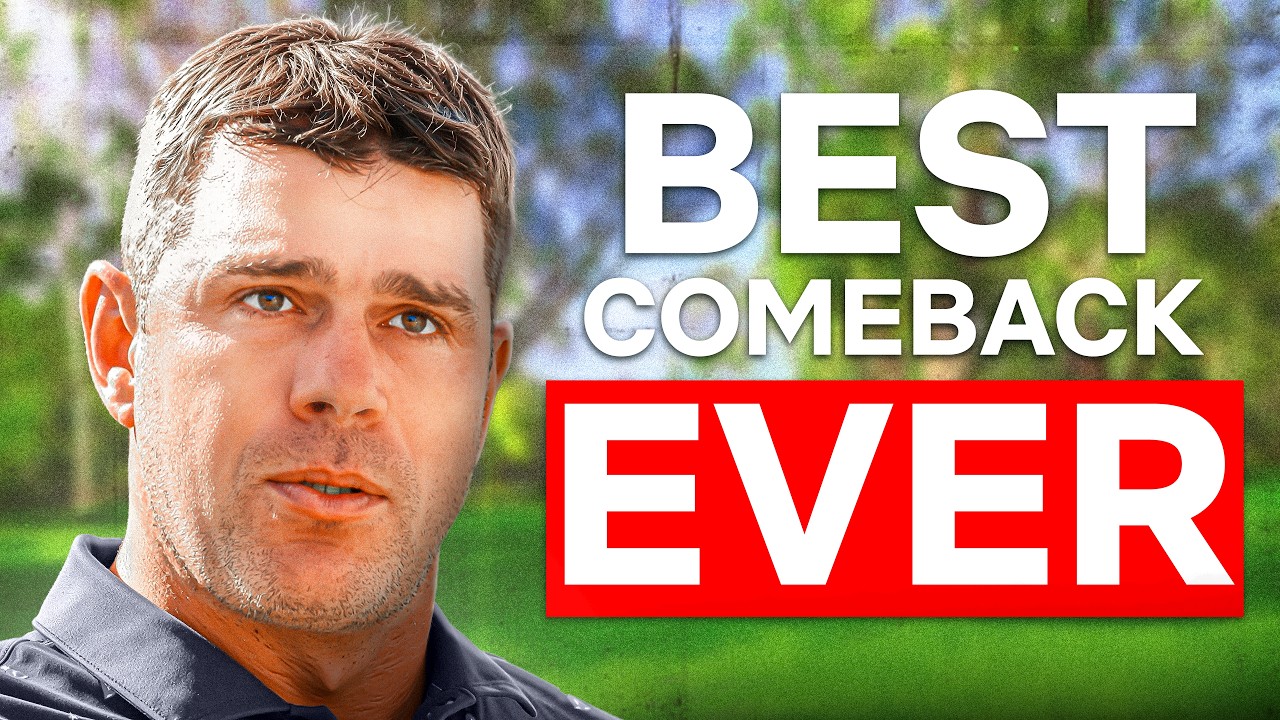
The teardown in brief
What's working
- Audio energy modulation is EXCELLENT for documentary format. You alternate between LOUD intensity during emotional peaks (surgery description, PTSD episodes, final round) and NORMAL delivery for reflective moments. The 11dB dynamic range creates natural storytelling rhythm without exhausting the viewer. At 2:12-2:30 (seizure and MRI reveal), you sustain -16.8dB LOUD delivery for 18 seconds — perfect for the medical crisis weight.
- The rewind structure (result → backstory → struggle → resolution) works brilliantly for sports documentary. Opening with the 2026 win proves the story is worth watching, then rewinding to 2019 glory establishes what he lost, then the medical crisis creates genuine stakes. Viewers KNOW he survives the surgery because we saw him win — but we still feel tension because we don't know HOW he gets from brain tumor to trophy.
- You frame the comeback through EMOTIONAL stakes, not competitive stakes. This isn't 'will he win the tournament' — it's 'will he still be Gary Woodland after they cut into his skull?' The goodbye letters (3:00-3:15), the PTSD episode at Napa (5:10-5:28), and the shoe symbolism (8:56-9:15) all prioritize human struggle over sports results. That emotional investment carries viewers through the slower middle section.
What's costing attention
- The 2024-2025 struggle period (6:45-8:00) is structured as a statistical catalog instead of a narrative. You list tournament failures, FedEx Cup standings, and world ranking drops like reading a results sheet. Documentary audiences tolerate detail, but this section needs ONE vivid failure moment instead of twelve abstract statistics.
- Round-by-round tournament coverage (9:20-10:15) treats each round with identical structure and weight. Rounds 1-2 don't carry the same dramatic importance as round 3 (when Højgaard closes the gap), but you give them equal screen time. This creates 60 seconds of repetitive pacing right before the climax.
- The shoe charity tangent (8:30-9:20) is beautiful thematic content (two brain tumor survivors, parallel courage) but it's MISPLACED. You've spent 8 minutes building anticipation for the Houston Open, then delay the tournament start for 50 seconds of charity context. Move this to AFTER round one success so it amplifies the action instead of interrupting it.
The first 30 seconds
March 29th, 2026. Gary Woodland sinks his final putt at the Houston Open, finishing five shots clear of the field, his first PGA Tour victory in seven years. But whilst the cameras captured the thousands of fans in attendance who were chanting his name, Woodland's tears represented what he'd overcome to get there. Just
Strong Tier 1 packaging delivery for documentary format. Hook fires at 0:00 with the Houston Open victory (delivers on 'Won Again' from title), then pivots at 0:18 to reveal brain surgery stakes (delivers on first half of title). By 0:25, both title promises are confirmed and the viewer understands this is a medical comeback story. The 25-second hook speed is APPROPRIATE for documentary/essay format where enthusiast audiences expect setup. Predicted 22% packaging drop vs 20-25% baseline for sports documentary.
Where viewers drop
7:00 — Statistics Catalog (moderate)
You spend 70 seconds listing tournament results and statistics: 'missed cut in 11 of 26 events, finished 115th, dropped 139 spots, world ranking fell.' Your viewers came for an emotional comeback story — this feels like reading a stat sheet. The audio energy drops to NORMAL (-19 to -20dB) during this section, which is appropriate for information delivery but doesn't compensate for the catalog format. By the time you finish the numbers and get back to the human story, you've lost viewers who treat this as a natural pause point.
Why it matters — Enthusiast golf audiences tolerate more detail than general sports content, but even they feel the drag here. The 2024 struggle period is CRITICAL context — it proves how unlikely the 2026 win was — but right now it's structured like a Wikipedia entry, not a story.
8:30 — Shoe Charity Tangent (moderate)
You spend 50 seconds on the Texas Children's Hospital shoe partnership and Sessi's story. This is beautiful context that adds thematic weight (two brain tumor survivors, parallel courage), but it arrives AFTER you've already teased the tournament outcome and built anticipation. Your viewers are mentally ready for 'here's how the tournament unfolded' and instead you pivot to 'first, let me tell you about custom shoes.' The audio energy is moderate here (LOUD at -17dB), showing you KNOW this is important — but the PLACEMENT creates friction.
Why it matters — Documentary audiences expect purposeful tangents, but this one interrupts forward momentum. You've spent 8 minutes building to 'Houston Open 2026' and when we finally arrive, you delay the action for charity context. It's not BAD information — it's BADLY PLACED information.
9:15 — Round-by-Round Repetition (mild)
You cover rounds 1-3 with nearly identical structure: 'Round one, Gary posted 64, lowest of the day, leading. Round two, he did even better with 63, leading by three. Round three, another 65, but Højgaard at his heels.' Each round gets the same treatment: score → standing → brief commentary. This is 60 seconds that feels mechanically repetitive even though the scores are improving. The audio energy stays LOUD throughout (-16 to -17dB), which helps maintain intensity, but the WORDS are predictable.
Why it matters — Sports documentary has an inherent repetition problem — how do you cover sequential rounds without boring the viewer? Your current approach treats each round as equal weight, but round one and round two don't matter nearly as much as round three (the drama of Højgaard closing the gap). By treating them identically, you waste the viewer's escalating investment.
How the video is built
- 0:00 Hook: Result Reveal & Stakes Introduction — Opens with 2026 Houston Open victory, then immediately reveals the medical stakes (brain tumor, PTSD). Classic documentary structure: show the destination, then rewind to show the journey.
- 0:33 Act 1: The Peak (What He Had) — 2019 US Open victory at Pebble Beach. Establishes Woodland at his professional and personal peak (major champion, young family, elite skill). The 17th hole pitch shot moment creates emotional investment in what he's about to lose.
- 1:30 Act 2: The Crisis (What He Lost) — 2023 tumor discovery and brain surgery. Escalating medical symptoms (appetite loss, shaking hands, seizures, nightmares), diagnosis (tumor pressing on amygdala), goodbye letters, surgery, and initial recovery. Peak dramatic tension.
- 4:30 Act 3: The Hidden Battle (PTSD) — Post-surgery recovery complications. PTSD diagnosis, Napa episode (couldn't remember where he was), hiding the condition, finally going public. Introduces secondary stakes beyond physical recovery.
- 6:50 Act 4: The Struggle (2024-2025 Failures) — Return to PGA Tour too soon, tournament failures, statistics catalog, paradox of elite physical ability vs mental struggle. Sets up the comeback by showing how unlikely it is.
- 8:30 Act 5: The Redemption (Houston Open 2026) — Houston Open tournament coverage. Shoe charity setup, round-by-round scores, Højgaard duel, Sunday final round surge, victory, family reunion on green. Delivers on all open loops and emotional investment.
What any creator can steal
- Replace the 2024 statistics catalog with one vivid failure moment
- Move the shoe charity story to AFTER round one, not before the tournament starts
- Compress rounds 1-2, expand the Saturday Højgaard tension
- Add sensory detail to medical crisis moments
- Lift audio energy 2-3dB during peak emotional moments
- When covering sequential events (tournament rounds, recovery milestones, career statistics), ask: 'Do all these iterations carry equal dramatic weight?' If not, compress the less important ones and expand the high-stakes moments. Your round-by-round coverage treats rounds 1-2-3 identically, but Saturday's one-shot lead is 10x more important than Friday's three-shot lead. Weight your screen time accordingly.
More teardowns from Final Putt
- The Rise, Fall And Rise Again of Rory McIlroy
- How Good Was Jack Nicklaus Actually?
- How Good Was Wesley Bryan Actually?
- I Found Out Why LIV Golf Failed
Want this on your own video?
Add your video's link and its retention graph from YouTube Studio, and Retti shows the moment viewers left and why. Your first review is free.
Run your free review