I Found Out Why LIV Golf Failed
By Final Putt · Sports · 69.1K views · 16:27
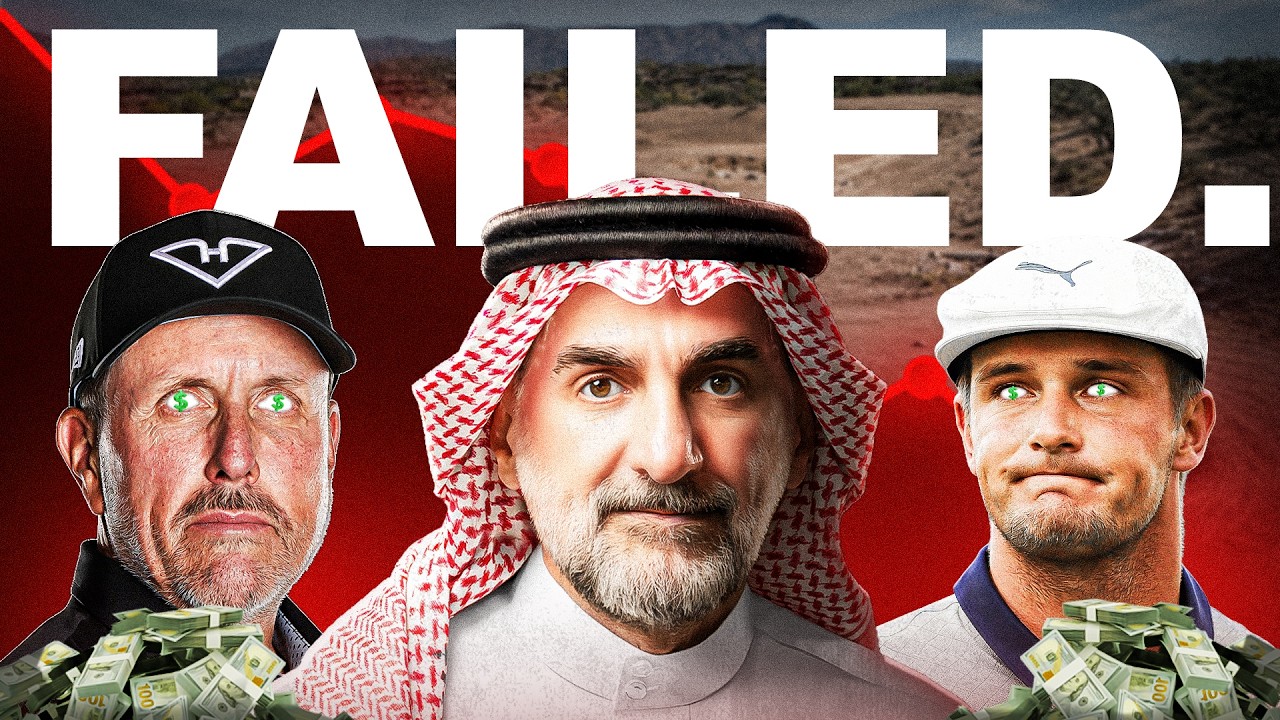
The teardown in brief
What's working
- The hook is exceptional for golf documentary content — a specific date, a specific person, a specific dollar amount, and a stakes-reveal ('hundreds of players wondering whether they'd ever play professional golf again') all delivered within 26 seconds. This is well above the channel average and platform average for this format.
- The 'but now comes the collapse' pivot at 5:48 is a masterclass in forward bridging — it acknowledges that LIV was building something real before explaining why it failed, which makes the analysis feel fair and the thesis more credible.
- The structural reveal at 8:22-9:17 ('this was not two tours merging as equals') is the best narrative beat in the video — it reframes the entire 'LIV won' framing as a misread and delivers genuine intellectual payoff.
What's costing attention
- Stakes are set once in the hook (player careers at risk, billions spent) and then the personal human cost largely disappears for 12 minutes, resurfacing only at the player classes section. Viewers tracking the story for career consequences get very little nourishment in the middle third.
- The video is almost entirely narration-driven with no quoted voices beyond the handful of institutional statements — Rory's quote at 3:12 is the only genuine emotional temperature spike in the first 10 minutes. More direct-speech moments would give the analytical voice breathing room.
- The conclusion (15:04-16:27) is analytically strong but emotionally flat — the video spends 80 seconds on what Saudi Arabia learned from the experience, which is the least emotionally resonant closing angle available. The class-three players are a more powerful final image.
The first 30 seconds
June 9th, 2022. Phil Mickelson walked to a podium at a golf course outside London having already been paid $200 million before hitting a single competitive shot. What followed was four years of billions spent, careers torched, and a war that reshaped professional golf. But the organization Phil joined failed, and now h
Strong tier-one hook — specific date, name, dollar amount, and a genuine stakes-reveal all delivered before 30 seconds. Viewers who clicked 'I Found Out Why LIV Golf Failed' immediately see the story is delivered with the specificity and authority the title promises.
Where viewers drop
1:08 — Transcript Gap / Signing Montage (moderate)
After you name Mickelson's $200M deal, the transcript goes almost completely dark for about 96 seconds. Whatever fills that stretch, you lose verbal narrative continuity at the exact moment viewers are forming their emotional contract with the story.
Why it matters — Your hook built momentum around specific numbers and names — the verbal silence snaps that thread right when viewers needed the next hook to stay invested.
5:05 — World Ranking / Institutional Dry Patch (moderate)
You spend about 97 seconds on the OWGR denial and Niemann's ranking freeze — accurate and relevant, but it's the most institutional and policy-heavy passage in the video. Viewers who clicked for the human drama of LIV's collapse hit a stretch that feels like a governance memo.
Why it matters — This sits right at the 5-minute mark, which is a natural evaluation point for a 16-minute video. A dry policy section here gives undecided viewers a reason to leave.
6:45 — Recruitment / NIL Pacing Drag (mild)
The NIL deals and Tom McKibbin section (~75 seconds) is the most abstract stretch in the video — it explains why younger players chose the PGA, which is relevant context, but it's the one section where you're explaining a structural trend rather than telling a story about a specific person facing a real consequence.
Why it matters — After the vivid narrative of the framework agreement and the Adelaide success, this section reads like a business school case study. Viewers who came for the drama feel the pace shift.
13:32 — Player Classes — Emotional Underdelivery (moderate)
The three-class framework is your most emotionally powerful section — but it's delivered at the same measured pace as the rest of the video. Class three (the lower-tier players who may never play again) is genuinely devastating material, but it passes in about 80 seconds without a single named example to make it land.
Why it matters — This is the section viewers will cite if they recommend the video to someone. 'The guys nobody's writing about' deserves a name — a real player whose story makes the abstract real. Without it, the emotional potential of this section goes unrealised.
How the video is built
- 0:00 The War Begins — Hook establishes the scale, the players, and the conflict — LIV as a $200M provocation against the PGA establishment
- 2:44 The War's Complexity — The moral grey zone — PGA monopoly, player equity, Niemann's frozen ranking, Masters exception. LIV wasn't simply evil, but was building on sand.
- 8:01 LIV Was Building Something — Then Wasn't — Adelaide's 150,000 fans, Anthony Kim's comeback, CW broadcast — real product. But recruitment drying up, PGA adapting, and then the false 'merger.'
- 10:15 The Real Reason It Failed — The shotgun start killed television. The sponsor concentration was fatal. The losses were unsustainable. Congress made the acquisition deal impossible.
- 13:32 The Human Cost — Three classes of player left behind. Thesis delivery: LIV was never a sports league — it was an acquisition bid. What everyone learned from the $5B lesson.
What any creator can steal
- Add two stake callbacks during the institutional analysis sections
- The 96-second transcript gap after the hook needs a verbal anchor
- Name one class-three casualty before 'some of them may never play again'
- Plant a 'real reason' tease at the 7-minute mark to build to the shotgun start reveal
- Reframe the conclusion to end on the class-three players, not Saudi Arabia's lesson
- Build a human anchor checklist: for every institutional or policy section longer than 90 seconds, identify the specific named person most affected by that policy and make their situation the entry point into the section. Policy through people holds better than policy through structure.
More teardowns from Final Putt
- The Rise, Fall And Rise Again of Rory McIlroy
- How Good Was Jack Nicklaus Actually?
- How Good Was Wesley Bryan Actually?
- How Good Is Grant Horvat Actually?
Want this on your own video?
Add your video's link and its retention graph from YouTube Studio, and Retti shows the moment viewers left and why. Your first review is free.
Run your free review