How to Win With AI in 2026
By Alex Hormozi · Business · 487.8K views · 24:18
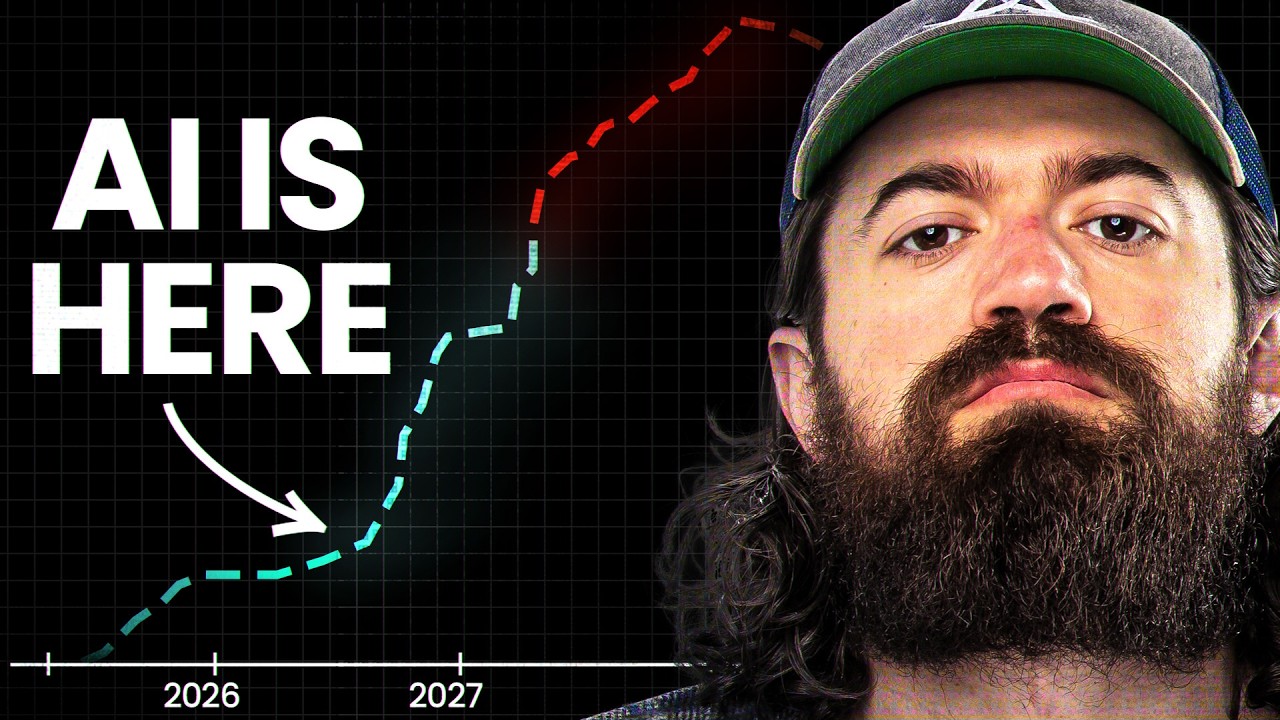
The teardown in brief
What's working
- Strong frameworks that translate to action: The workflow vs role-based thinking framework (4:50-7:00) is immediately usable. Breaking down hires into discrete tasks that could become workflows is concrete and actionable — this is the kind of tactical insight business audiences came for.
- Credibility signals that create authority: Mentioning private companies with 'revenue per employee in the millions' (1:30) and specific case studies like Anthropic's one-person marketing department (7:50) grounds the theory in real-world proof. These details make the viewer think 'this person has actual inside knowledge, not just internet research.'
- Practical final action steps: The 22:00-24:00 section gives specific instructions (write down your daily tasks at granular level, pick one, feed to AI, screenshot and iterate). This is the payoff the title promised — concrete steps someone could execute today.
What's costing attention
- No visual proof for any claims: 24 minutes of talking head with zero screen recordings, case study walkthroughs, or before/after examples. The viewer hears about 'million per employee revenue' but never SEES a workflow diagram, never watches an AI agent in action, never sees the automation the creator claims to use. For tactical business content, this is a massive missed opportunity — show don't tell.
- Repetitive urgency framing without escalation: The 'AI will change everything, you must adapt or die' message appears at 0:10, 1:00, 2:30, 3:30, 9:00, 13:30, and 17:00 with minor variations but no escalation. By the third iteration, the viewer has internalized the point — continuing to repeat it feels like the creator doesn't trust their intelligence. Each repetition should add NEW evidence or a NEW angle, not just restate the same warning.
- Frameworks explained but not demonstrated: The workflow thinking framework is smart, but explaining it verbally for 2 minutes (5:00-7:00) without showing an actual example workflow means most viewers will forget it by minute 8. A 30-second visual walkthrough of 'here's a marketing role broken into 6 tasks, here's task 1 automated in Zapier, here's the output' would make this 10x more memorable and actionable.
The first 30 seconds
Wake up. AI is here. Open claw moment happened over President's Day weekend and it started a month earlier and it was already acquired for a billion dollars by Open AI. If you're not paying attention to this, then you will be left behind. That being said, I am not here to fearmonger. I'm here to try and prepare you for
Tier 2 hook with significant packaging mismatch. Opens with 'Open claw moment happened over President's Day weekend' — an insider tech reference that requires context most viewers don't have. The title promises 'How to Win With AI' (utility/tactical framing) but the hook delivers tech industry news commentary. It takes until 0:40 ('I'm going to share some ways to think about AI and use cases') for the title promise to be reaffirmed. The strongest hook element (companies with millions per employee revenue enabled by AI) doesn't appear until 1:30, well outside the commitment window. Viewers who clicked expecting tactical AI strategy spend 40 seconds confused about whether they're watching the right video. This packaging confusion will cause 25-30% packaging drop vs 20% baseline for business content.
Where viewers drop
0:00 — Confusing Hook (critical)
The video opens with 'Open claw moment happened over President's Day weekend' — an insider tech reference that 90% of viewers won't recognize. The viewer who clicked on 'How to Win With AI' is expecting actionable strategy, not tech industry news commentary. They're confused about what 'Open claw' is and whether they're watching the right video. The title promise (how to WIN) doesn't appear until 0:40, leaving 40 seconds of uncertainty.
Why it matters — Packaging mismatch in the first 10 seconds causes 2-3x worse hook damage than structural issues alone. Viewers clicked for 'how to win' utility content but get opened with unexplained jargon. This confusion compounds every retention issue throughout the video. Predicted 25-30% packaging drop vs 20% baseline.
2:00 — Front-Loaded Philosophy (serious)
From 2:00 to 4:50, the viewer sits through nearly 3 minutes of philosophy about why people resist AI, short-term vs long-term thinking, and the '20 hours to proficiency' concept. This is all context — the viewer learns WHY they should care but gets zero tactical value. They clicked for 'How to Win' (a tactical title) but are getting a motivational lecture. At 4:30, the thought surfaces: 'Okay but WHAT do I actually DO?'
Why it matters — Front-loaded context before first payoff causes 8-12% drop in commitment window for business content. You haven't earned the viewer's trust yet — they need proof you can deliver before they'll tolerate theory. Every minute of 'why' before 'how' bleeds viewers who want action.
13:49 — Commitment Window Sponsor (critical)
At 13:48, right as the viewer is starting to get invested in the frameworks (workflow vs role thinking, BYOA concept), the video cuts to a sponsor read for a roadmap download. This is textbook commitment window interruption — the viewer hasn't decided whether to stay for the full 24 minutes yet, and you're asking them to leave for an external link. They haven't extracted enough value to feel the download is worth it, so they either (a) bounce to check it out and don't return, or (b) feel annoyed by the interruption and use it as an exit ramp.
Why it matters — Sponsor reads in the first 14 minutes cause 2-3x typical damage. A 36-second sponsor that would normally cost -5% costs -10-12% when placed before the viewer has committed. You've built some momentum from 4:50 to 13:48 teaching frameworks, and this sponsor kills it. This is the single worst possible placement.
0:00 — Flat Energy Delivery (moderate)
The audio energy data shows 95% of the video at the same LOUD level (-14.7dB) with only brief 3-second dips to normal conversational tone. For 24 minutes, the creator maintains high intensity without strategic variation. The viewer experiences this as relentless — there's no breathing room, no quiet moments for reflection, no loud peaks that signal 'THIS IS THE KEY POINT.' At 12 minutes in, the viewer's brain tunes out because every sentence sounds equally important, which paradoxically makes nothing feel important.
Why it matters — Sustained monotone delivery (even at high energy) adds 2-3% cumulative decay beyond structural issues. For a 24-minute video, that's 6-9% total loss from delivery alone. The lack of contrast means the viewer can't tell when one section ends and another begins, can't identify which moments are critical vs supportive, and experiences cognitive fatigue. Business content allows for more measured pacing — this audience WANTS deliberate authority, not constant intensity.
How the video is built
- 0:00 Urgency Framing — Hook and fear-based motivation — AI is here, you're behind, but I'll help you catch up
- 4:50 Core Frameworks — Workflow vs role thinking, training AI like employees, historical adoption patterns
- 14:25 Future Predictions & Strategy — BYOA concept, barbell strategy, industry predictions, apocalyptic scenarios
- 22:00 Action Steps & Close — Granular task breakdown method, AI tutor framing, final CTA
What any creator can steal
- Rewrite the hook to lead with outcome, not jargon
- Move the sponsor to after first tactical payoff
- Show don't tell — add screen recordings
- Cut 2 minutes of philosophy to add 2 minutes of proof
- Add energy variation to mark sections
- When you mention 'companies with millions per employee revenue' or 'Anthropic's one-person marketing department,' don't just namedrop — tell the 90-second story. Who is that person? What does their day look like? What agents do they use? Abstract frameworks become concrete through specific examples.
More teardowns from Alex Hormozi
- The Money Formula I Used To Actually Get Rich
- How to make progress faster than everyone
- How to Get Your Customers to Stay FOREVER
- Helping E-Commerce Business Owners Scale
Want this on your own video?
Add your video's link and its retention graph from YouTube Studio, and Retti shows the moment viewers left and why. Your first review is free.
Run your free review