How to make progress faster than everyone
By Alex Hormozi · Business · 125.8K views · 7:57
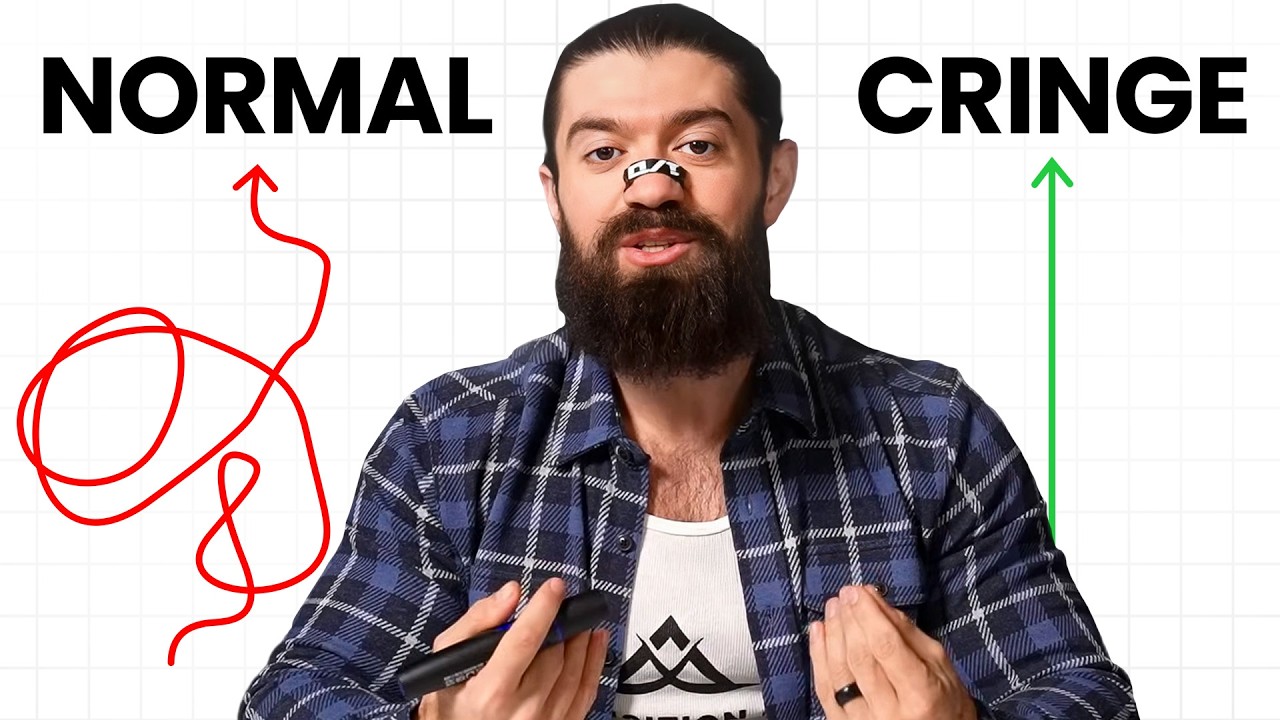
The teardown in brief
What's working
- Hook fires in 3 seconds with archival contrast and immediately reaffirms packaging promise ('how far anyone can come'). The before/after montage is visceral proof of transformation, which is exactly what the title promises. Opening with your WORST work is counterintuitive and magnetic.
- Vulnerability creates massive trust and identification. Showing genuinely embarrassing work (the first ad, the awkward fitness videos) disarms viewer self-judgment. You're not preaching from a pedestal — you're saying 'I was you, and here's proof.' This is the core retention mechanic and it works brilliantly.
- Audio energy matches conviction without becoming exhausting. Average -17.8dB is HIGH for business content, but you earn it through genuine intensity about the message. The 63% loud / 36% normal split prevents monotony. You're fired up, not performing. Viewers feel your belief in the thesis.
What's costing attention
- Sponsor placement at 4:12 interrupts emotional flow during the most vulnerable moment of the video. You just said 'I will never let this happen again' (massive identification moment), then pivot to selling book bundles. The tonal whiplash breaks connection. Move sponsor to a natural section break or cut duration to 20 seconds.
- Archival montage lacks progression commentary. By the 5th clip, the viewer has mentally mapped the pattern: show old work → acknowledge it's cringe → repeat. Adding brief analysis between clips ('notice how I'm already experimenting with hooks by clip 2?') would teach HOW you improved, not just THAT you improved. Right now it's proof without lesson.
- Abstract philosophy section (0:29-1:48) front-loads framework before emotional anchoring. Defining shame/guilt/cringe for 79 seconds tests patience when the viewer wants story continuation. One micro-example at 0:45 would anchor the theory to reality and prevent drift. Theory matters, but interleave it with proof.
The first 30 seconds
This is the first piece of content I ever made. >> Don't let your >> This is the first ad I ever made. >> Are you tired fitness? >> Fast forward today. We make 450 pieces per week. I broke the Guinness World Record for the fastest selling non-fiction of all time with $16 million in sales in a weekend. And we own a port
Tier 1 hook — fires in 3 seconds with archival contrast and immediately reaffirms the title's promise ('how far anyone can come'). The before/after montage is visceral proof of transformation, which is exactly what viewers clicked for. Opening with your WORST work is counterintuitive, magnetic, and builds instant credibility through vulnerability. Zero confusion about video's purpose. Strong packaging delivery for motivational essay format.
Where viewers drop
4:13 — Sponsor Break During Momentum (moderate)
The viewer is emotionally invested in the 'document your journey' advice and personal story ('I lost everything for the second time'), then hits a 42-second sponsor read for book bundles. The tonal shift from vulnerable confession to sales pitch breaks the emotional flow. Viewers mentally checkout during sponsor reads, and this one sits at the 53% mark — right when commitment is solidifying.
Why it matters — Sponsor reads in essay/motivational content interrupt emotional momentum more than in tutorial content. The viewer was connecting with your vulnerability at 4:07 ('I will never let this happen again'), then you pivot to selling. Expect a 5-7% drop here that wouldn't recover — the emotional thread is severed. Placement at the halfway mark is psychologically risky; viewers haven't extracted enough value yet to tolerate interruption.
5:17 — Archival Clip Fatigue Risk (mild)
The viewer watches 160 seconds of old clips (40% of the total video). Each clip reinforces the 'you will be cringe' thesis, but by the 5th-6th example, the format becomes predictable: show old clip → 'super cringe' → next clip. The viewer thinks 'okay I get it, you used to be bad.' The montage is the PROOF that makes the entire essay work, but repetitive delivery drains impact. The clips themselves are visually distinct (ads, posts, videos), but the framing is mechanically identical.
Why it matters — Pattern recognition sets in by the 3rd iteration of any structure. After seeing 'here's old work → cringe acknowledgment' three times, the viewer mentally maps what's coming and disengages slightly. This is format fatigue, not content weakness — the clips ARE valuable, but the presentation loop becomes predictable. Expect a gradual 3-5% bleed across this section as novelty decreases. Not catastrophic, but real.
0:29 — Abstract Philosophy Before Concrete Stakes (mild)
For 79 seconds (0:29-1:48), the viewer receives definitions of shame/guilt/cringe and philosophical arguments about status plays, rule-breaking, and caring. This is intellectually dense but emotionally distant. The viewer clicked for a motivational transformation story (promised in the hook), but you're in 'philosophy lecture' mode. Audio energy is high (-16.8dB) so it doesn't FEEL slow, but no concrete stakes or examples appear until 1:48 when you mention the guy who outsourced content. Some viewers mentally drift here because they're waiting for the STORY to resume.
Why it matters — Essay audiences tolerate abstraction better than challenge audiences, but even patient viewers need periodic anchoring. This section is 16% of the total video and delivers pure framework without proof. The definitions ARE useful for the later payoff, but front-loading theory tests commitment. Expect a gradual 2-4% decay here — not a sharp drop, but a slow bleed from viewers who wanted inspiration, not philosophy class.
How the video is built
- 0:00 Thesis & Credibility — Before/after hook establishes transformation credibility, sets up central thesis: you will be cringe, and that's okay.
- 0:29 Philosophical Framework — Defines cringe, explores status dynamics, dismantles objections to caring. Builds intellectual case for why vulnerability is strength.
- 3:01 Practical Application & Documentation Advice — Shifts from philosophy to actionable advice: document your journey, don't be ashamed. Personal anecdotes anchor the framework.
- 4:57 Visual Proof (Archival Montage) — Delivers on 'I went through the archives' promise. Shows progression from terrible first attempts to current competence. Vulnerability as ultimate proof.
What any creator can steal
- Sponsor placement destroys vulnerability momentum at 4:12
- Archival montage becomes mechanically repetitive by clip 5
- Philosophy section lacks concrete anchoring for 79 seconds
- Hook's specific accomplishments never connect to archival proof
- No progress markers in 160-second archival montage
- Build 'teaching moments' into proof sections. The archival montage shows WHAT was cringe but rarely explains WHY it failed or what you learned. Future transformation videos should interleave proof with micro-lessons: 'This ad bombed because I was selling features, not outcomes.' Turn montages into masterclasses, not just compilations.
More teardowns from Alex Hormozi
- How to Win With AI in 2026
- The Money Formula I Used To Actually Get Rich
- How to Get Your Customers to Stay FOREVER
- Helping E-Commerce Business Owners Scale
Want this on your own video?
Add your video's link and its retention graph from YouTube Studio, and Retti shows the moment viewers left and why. Your first review is free.
Run your free review