I Trapped Every POPPY PLAYTIME Monster in Minecraft
By Checkpoint · Gaming · 553.6K views · 21:16
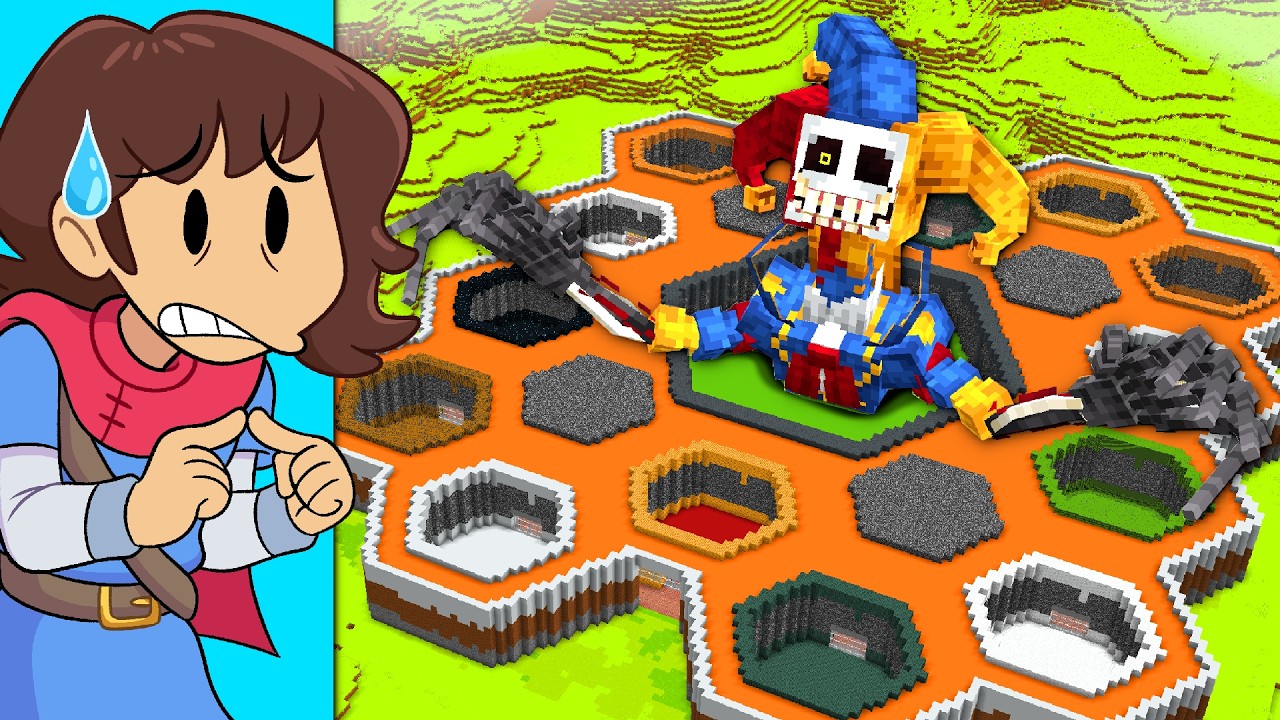
The teardown in brief
What's working
- Progress counter is used consistently and specifically ('1 out of 15', '6 out of 15') — this is exactly what keeps young audiences tracking along through a long-form challenge video.
- The upgrade system is structurally brilliant — every capture unlocks a new tool, which means every monster is also a reward for completing the last one. The viewer is always playing to unlock the next upgrade.
- The PBR cycle (problem → brainstorm → resolution) is executed cleanly in most captures, especially Lily and Pianoaurus, where the failure attempts actually build tension before the solution lands.
What's costing attention
- No stated consequences for failure anywhere in the video. Steve tries and fails frequently, but there's no punishment for missing — which means the viewer roots for success but never fears failure.
- The final 90 seconds (Prototype capture + non-ending) fail to deliver emotional payoff for 21 minutes of build-up. The video's biggest moment is also its most rushed.
- Audio delivery sits at LOUD for 96% of the video with almost no quiet contrast. Individual exciting moments lose impact because there's no calm to contrast against — the entire video runs at one emotional temperature.
The first 30 seconds
My world has been invaded by the scariest Poppy Playtime monsters. So, it's my job to capture them all in my maximum security prison. So, we've got our suspects and each one of them has a cell within the mega prison. Now, we just need to find them. Guido, >> I think we got our first. >> Is that puppy playtime? All righ
Concept lands in the first sentence, first action happens within 4 seconds — this is a clean tier 1 hook for the gaming/kids format. The only thing it's missing is any consequence for failure, which limits how tense the next 21 minutes can get.
Where viewers drop
0:00 — Zero Consequence Stakes (critical)
For the entire 21 minutes, there is no stated consequence if Steve fails to capture a monster. He tries, fails, brainstorms, and succeeds — but there's nothing on the line. The viewer never has a reason to FEAR failure, only to watch how success happens.
Why it matters — Without consequences, every capture attempt is a puzzle to watch — not a fight to root for. The viewer is entertained but never hooked by dread, which means they can check out at any moment without missing anything emotionally significant.
14:00 — Formula Lock-In After Monster 6 (moderate)
By the 14-minute mark (monster 9 onwards), the capture pattern is completely predictable: encounter monster → face a complication → use the upgrade or a new gadget → capture. The Doughy sequence (14:35–19:05) runs 4.5 minutes of this loop with two monsters back to back, and sharp viewers can call the solution before Steve does.
Why it matters — Predictable structure gives viewers permission to leave — if they already know how this ends, there's no reason to stay for the execution. In a 21-minute video this late, the audience who've committed this far are your most loyal viewers and you're asking them to stay through a sequence they can mentally fast-forward.
20:59 — Abrupt Non-Ending (critical)
The video cuts off mid-sentence — Guido says 'does that mean' and the video ends without completion. The final capture (The Prototype at 20:58) gets a brief 'yes' and one line from Steve, then trails immediately into Guido's unfinished observation. There is no celebration, no callback to the opening prison concept, no emotional payoff for completing all 15 monsters.
Why it matters — The final 18 seconds after the last capture are the most important in the video — they're what makes a viewer click the next video, subscribe, or share. Right now they deliver nothing. Completing a 15-monster capture challenge deserves a 30-second victory beat, not a sentence fragment.
19:50 — The Prototype Feels Rushed (moderate)
The Prototype is described at 19:07 as 'literally the deadliest of all the Poppy Playtime monsters' — the ultimate final boss. But from first sighting to capture takes approximately 70 seconds (19:50 to 20:58), and the juggernaut suit essentially makes the fight trivial. The biggest build-up in the video has the shortest payoff.
Why it matters — You spent 19 minutes earning the right to fight this boss — and the viewer has been with you the whole way. A 70-second final encounter feels like the video forgot its own climax. The viewer needed 2-3 minutes of genuine struggle here to make the juggernaut suit reveal feel earned.
How the video is built
- 0:00 The Hunt Begins (Monsters 1-2)
- 3:20 Group Capture — Nightmare Critters (Monsters 3-6)
- 6:40 The Tricky Ones — Lily & Pianoaurus (Monsters 7-9)
- 12:40 Prison Under Threat + Doubles (Monsters 10-13)
- 19:05 The Final Boss — The Prototype (Monster 15)
What any creator can steal
- Add explicit failure consequences in the first 20 seconds
- Record a proper 30-second ending — the video cuts off mid-sentence
- Add a Prototype foreshadow at the halfway point
- Break the capture formula with a genuine reversal in the second half
- Add one stake-reminder line every 4-5 minutes
- Before filming, decide the CONSEQUENCE of failure and state it clearly in the first 20 seconds. It can be funny ('I have to wear a HuggyWuggy costume for the rest of the series') or tense ('the prison resets') but it needs to exist. No consequence = no stakes = audience can leave anytime.
More teardowns from Checkpoint
- Surviving 99 Years as a WORM in Minecraft
- Upgrading PROTOTYPE Into a GOD in Minecraft
- Upgrading CRABTANIC Into a GOD in Minecraft
- Upgrading CAINE Into a GOD in Minecraft
Want this on your own video?
Add your video's link and its retention graph from YouTube Studio, and Retti shows the moment viewers left and why. Your first review is free.
Run your free review