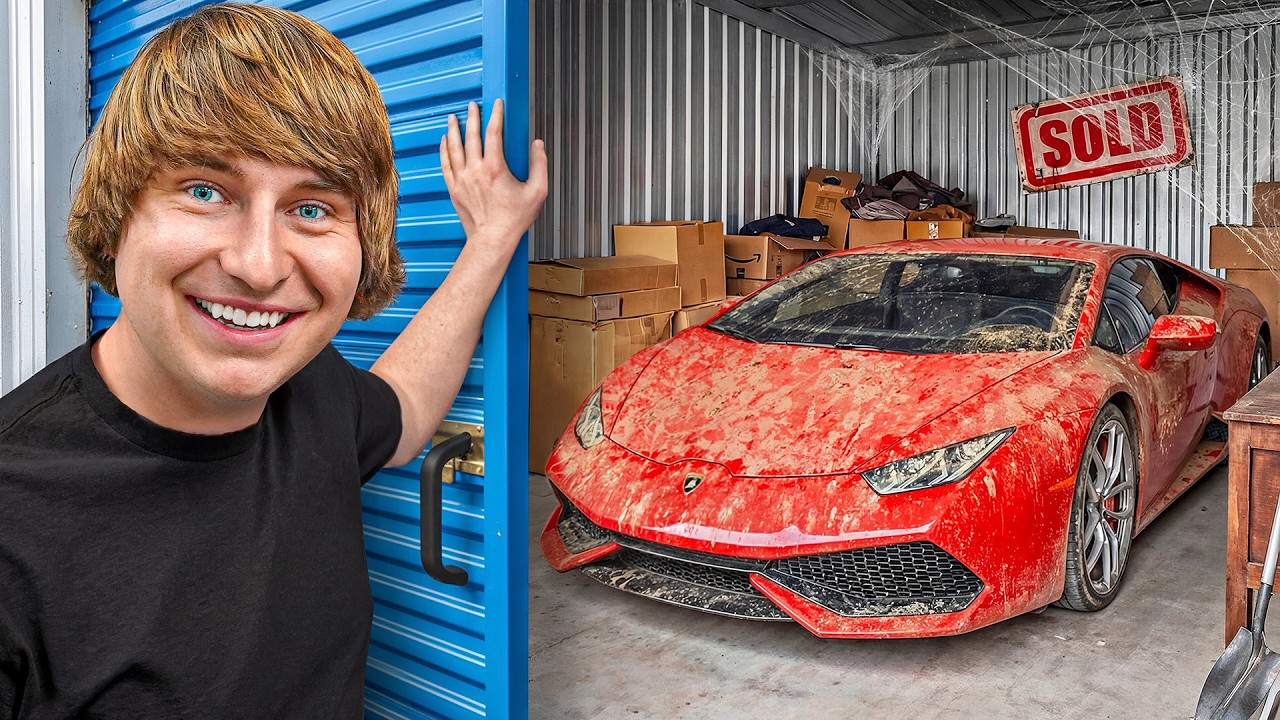
I Bought a $10,000 Abandoned Storage Unit!
By Matthew Beem · Entertainment · 2M views · 18:52
The teardown in brief
What's working
- The hook is genuinely excellent — concept, stakes, time limit, and action start all land within 18 seconds. The 'winner keeps all losers' money AND items' consequence is specific and visceral.
- The coffin discovery at 1:07 is a perfect early payoff — high energy, genuine surprise, resolved quickly with humor, then immediately returns to competition framing. This is exactly how to structure an early hook payoff.
- Andrew's eBay-seller strategy is a smart narrative twist — it rewards attentive viewers and delivers a satisfying 'why they won' explanation rather than just announcing a number.
What's costing attention
- Stakes persistence is the biggest structural hole. The competition is set up in 18 seconds and then barely mentioned for 16 minutes. No score updates, no 'we're losing' urgency, no 'this find just changed everything' framing.
- The sponsor break at 5:14 breaks the video's best sustained tension moment (the mystery box) and runs 94 seconds — nearly double what the format can absorb without viewer attrition.
- The selling phase (final 3 minutes) has no visible tension because viewers don't know the scores. Andrew's win lands as a surprise rather than a payoff.
The first 30 seconds
I just bought these three abandoned storage units for $10,000 and they can have a value of literally nothing all the way up to finding a sports car. I challenge my friends to see who can make the most money in 24 hours by selling the items we find. And whoever makes the most money at the end of the day keeps all of the
Hook fires within 7 seconds — title promise confirmed, stakes stated, timer started, and action begins. This is a Tier 1 hook that limits the packaging drop to the lower end of expected range for MrBeast-style content.
Where viewers drop
5:14 — Mid-Video Sponsor Block (critical)
Right as your team discovers a mysterious 'do not open' box — peak curiosity — you halt everything for a 94-second Go Battle sponsor read. The entire exploration stops cold. Gameplay footage of a mobile game replaces the storage unit action your viewers showed up for.
Why it matters — You handed your audience an exit door at exactly the moment they were most hooked. The 'do not open' box is a perfect open loop, and instead of resolving it, you spend 90 seconds pitching a soccer game. Many won't come back.
6:50 — Competition Stakes Evaporate Mid-Video (moderate)
For roughly 7 minutes straight (post-sponsor through the safe discovery), the video is pure item-hunting with almost no scoreboard, no team comparisons, and no reminder of what's at stake. You find watches, Darth Vader toys, a jet ski, cameras — but the viewer loses track of why any of this matters competitively.
Why it matters — Without score updates, the second half of the video becomes a treasure hunt show rather than a competition. The tension that made the hook so strong just quietly disappears, and there's nothing forcing viewers to stay to see who wins.
9:00 — Repetitive Item Discoveries Without Escalation (moderate)
From minute 9 to minute 13, the video cycles through the same mechanical beat 8-10 times: find an item, guess its value, move on. Find an item, guess its value, move on. The box-within-a-box sequence (8:32-8:55) is funny once but the joke is milked across 4 boxes. The Jordan sneakers, the cameras, the microwave — each treated identically in structure.
Why it matters — Without escalation or variation in HOW each item is presented, viewers start predicting the pattern. When viewers can predict what's coming next, they leave. This is the stretch where your retention graph almost certainly shows its longest steady bleed.
14:50 — Selling Phase Loses Competitive Momentum (mild)
The final 3 minutes of selling has great moments (Aaron's mom, coffin at the drive-through) but lacks a scoreboard or any indication of who's ahead. Viewers don't know whether each sale matters or not. The selling phase runs 3 minutes without a clear 'here's where we stand' anchor until the abrupt winner reveal.
Why it matters — After an 18-minute investment, viewers deserve some scoreboard drama leading into the reveal. Without it, Andrew's win at 18:24 feels sudden rather than earned. The tension that should be building in the final 3 minutes is mostly absent.
How the video is built
- 0:00 Hook + Team Split + First Discoveries
- 1:56 Deeper Exploration + Sponsor + Comedy Beats
- 6:49 Mid-Game Discoveries + Safe + Rare Items
- 14:49 Selling Phase + Winner Reveal
What any creator can steal
- Move the sponsor break away from the mystery box tension
- Add competition score updates at the 9-minute and 12-minute marks
- Cut two of the four nested boxes from the 8:32-8:55 sequence
- Plant Andrew's eBay strategy hint earlier in the video
- Extend the winner reveal by 30-45 seconds before jumping to CTA
- Build a live competition tracker into the video structure from the start. In the script, plan specific 'scoreboard check-in' moments every 3-4 minutes. It doesn't have to be accurate — estimate team values and let the competition tension run hot the whole video, not just at the reveal.
More teardowns from Matthew Beem
- I Met 7 People Who Shouldn't Exist!
- I Built a Secret Room to Hide From MrBeast!
- I Secretly Lived in iShowSpeed's Tour Bus!
- I Turned My Bedroom Into A Fish Tank!
Want this on your own video?
Add your video's link and its retention graph from YouTube Studio, and Retti shows the moment viewers left and why. Your first review is free.
Run your free review