How a Mitsubishi Engineer Built the Zero - The Fighter That Ruled the Pacific
By THE MILITARY ARCHIVES · History · 325K views · 35:48
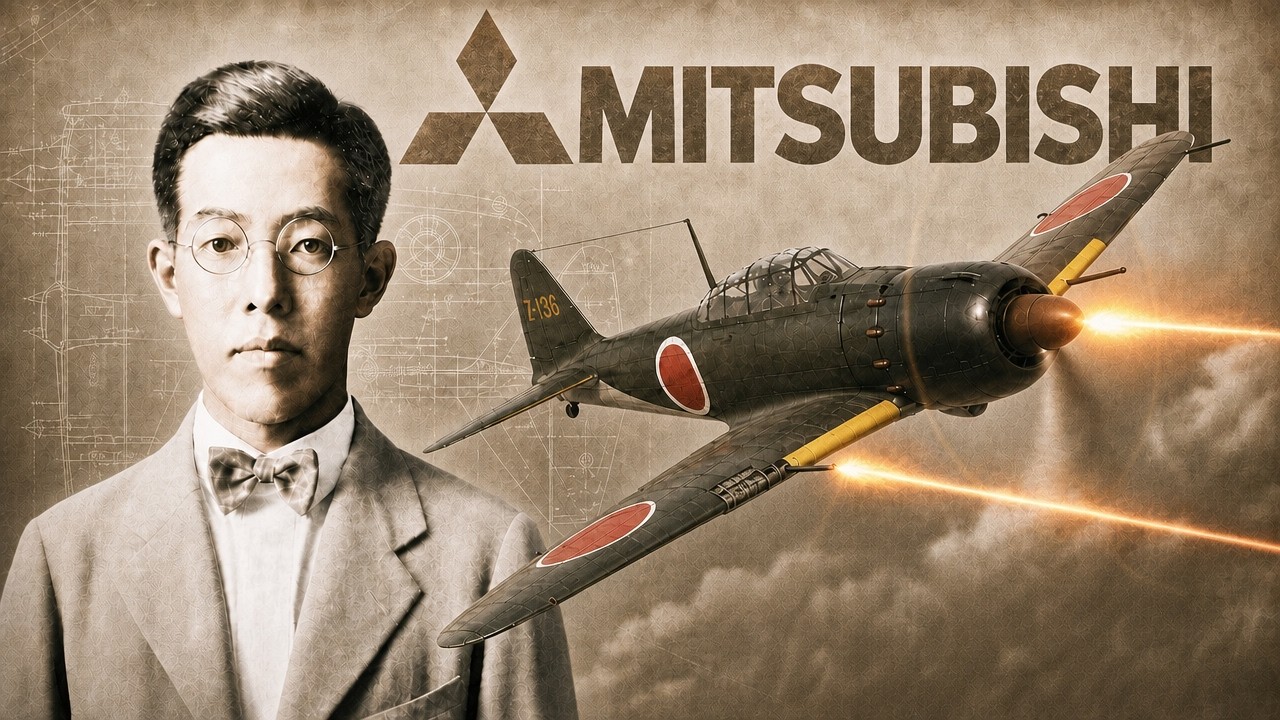
The teardown in brief
What's working
- The opening hook reframes the entire concept of carrier fighters using physics — it creates genuine intellectual curiosity before introducing a single named person, which means the payoff (Horikoshi's solution) lands harder because the viewer has already accepted the problem as real and impossible
- The armor-removal decision at 8:15 plants a structural foreshadowing that pays off perfectly at 16:16 — the Zero's fatal vulnerability is revealed as the inevitable consequence of the engineering choice the viewer watched Horikoshi make, creating the strongest emotional beat in the video
- The three-stage decline narrative (tactical → intelligence → industrial) is unusually clear and satisfying structure for a military history video — it shows why the Zero failed without reducing it to 'better planes won', which keeps the viewer intellectually engaged through the back half
What's costing attention
- Stakes are set once — the specification impossibility — and never explicitly reinforced. After the first prototype flies at 10:17, the viewer has no framework for what's personally at risk for Horikoshi if the Zero fails in combat. His emotional investment in the aircraft isn't established until 24:02, which is two-thirds of the way through.
- The post-war Mitsubishi Motors section (26:15-30:08) loses Horikoshi as protagonist for nearly four minutes. The engineering lineage thesis is correct but the section reads as corporate history rather than human story — it needs Horikoshi's engineering principles as the explicit connecting thread.
- The closing statistics block (32:23-34:02) buries the thesis inside revenue figures instead of landing the emotional and intellectual close the video has earned. The final 90 seconds after that close are excellent — the problem is the two minutes before them.
The first 30 seconds
In 1937, no carrier-based fighter on Earth could match a land-based opponent. The physics made it impossible. A carrier fighter had to be light enough to launch from a ship, strong enough to survive the shock of an arrested landing, and compact enough to fold its wings and descend into the hangar deck below. Every one
Tier 1 delivery — the physics impossibility is established by second 5, the carrier-fighter limitation framing is clear and specific, and by 0:28 the viewer knows exactly what kind of video this is: a precise, authoritative engineering history. No wasted seconds before the core premise.
Where viewers drop
3:22 — Mitsubishi Corporate History Detour (moderate)
The narrative pulls completely away from Horikoshi for about 76 seconds to trace Mitsubishi's origins from an 1870 shipping company through zaibatsu consolidation, coal mines, banks, and real estate. A viewer who clicked for the Zero's engineering story is now in a corporate history lesson.
Why it matters — This section creates the single longest stretch before we get back to the engineering problem — the viewer loses the thread of 'can this guy solve the impossible specification' just as that tension was building.
28:14 — Post-War Mitsubishi Motors Expansion (moderate)
After the emotionally powerful Kamikaze sequence and Horikoshi's private devastation, the video pivots to describing Mitsubishi's automotive expansion through the 1970s and 1980s — Dakar Rally wins, the Pajero, the Lancer Evolution, global sales in 160 countries, fourth-largest automaker in Japan. It runs about 114 seconds and is informationally dense but emotionally flat after the preceding devastation beat.
Why it matters — The emotional high is the Kamikaze section and Horikoshi's diary. Viewers emotionally committed to his story are now watching a brand history segment with no human anchor. The thesis 'engineering DNA transferred from fighters to cars' is strong, but it needs Horikoshi tethering it — without him, it reads as a company ad.
14:10 — Allied Aircraft Catalog (mild)
The narration lists the aircraft the Zero outfought — Brewster Buffaloes, Curtiss P-40 Warhawks, Curtiss Hawk 75s, Hawker Hurricanes, then Burma, then Ceylon — in a rapid catalog format. The 12-to-1 kill ratio landing at 15:04 is the payoff, but the path there is a list rather than a story.
Why it matters — Viewers who aren't aviation historians don't have emotional context for those aircraft names — it reads as a foreign-language roll call. The impact of the Zero's dominance is the point; the specific type names are trivia for most of the audience.
32:23 — Closing Epilogue — Mitsubishi Conglomerate Statistics (mild)
About 99 seconds of specific statistics about modern Mitsubishi Group — 77,000 employees, 4.6 trillion yen, rockets, gas turbines, naval destroyers, six continents, hundreds of billions of dollars, one million people workforce. The information is accurate and impressive but reads as a corporate fact sheet rather than a narrative close.
Why it matters — The thesis the video is building toward is Horikoshi's engineering culture surviving everything. But this section buries that thesis inside revenue figures. A viewer looking for the emotional or intellectual payoff of Horikoshi's story is watching an annual report instead.
How the video is built
- 0:00 The Impossible Specification — Physics impossibility framed, Navy demands the impossible, Nakajima walks away, Horikoshi accepts
- 7:33 The Engineering Answer — Weight spiral problem, armor removal, T-7178 alloy, construction innovation, first flight, performance confirmation
- 11:44 The Zero Dominates — and its Fatal Flaw — Chungking, Western contempt, Pearl Harbor, 12:1 kill ratio, then the armor-removal payoff reveals catastrophic vulnerability
- 18:02 The Three Reversals — Tactical (Thach weave), intelligence (Koga's Zero), industrial (Hellcat/Corsair) — obsolescence, Turkey Shoot, Kamikaze, Horikoshi's devastation
- 24:50 The Engineering Legacy — Surrender, zaibatsu dissolution, Mitsubishi Motors, Horikoshi's post-war life, memoir, the culture that survived everything
What any creator can steal
- Cut the Mitsubishi corporate history from 3:22 to 4:37 by 60%
- Add a personal stakes line for Horikoshi before the weight problem section
- Re-anchor the Mitsubishi Motors section to Horikoshi's engineering principles
- Compress the conglomerate statistics block at 32:23 and move thesis first
- Add a midpoint navigation marker at 17:30 to signal the video's second half
- Every long-form documentary needs a personal-stakes sentence for the protagonist within the first 8 minutes — not just 'can he solve the problem' but 'what does he personally lose if he doesn't.' Write this line in your script before anything else. It's the emotional load-bearing wall everything else rests on.
Want this on your own video?
Paste any YouTube URL and Retti maps every drop, spike and plateau to the moment that caused it.
Analyse a video free