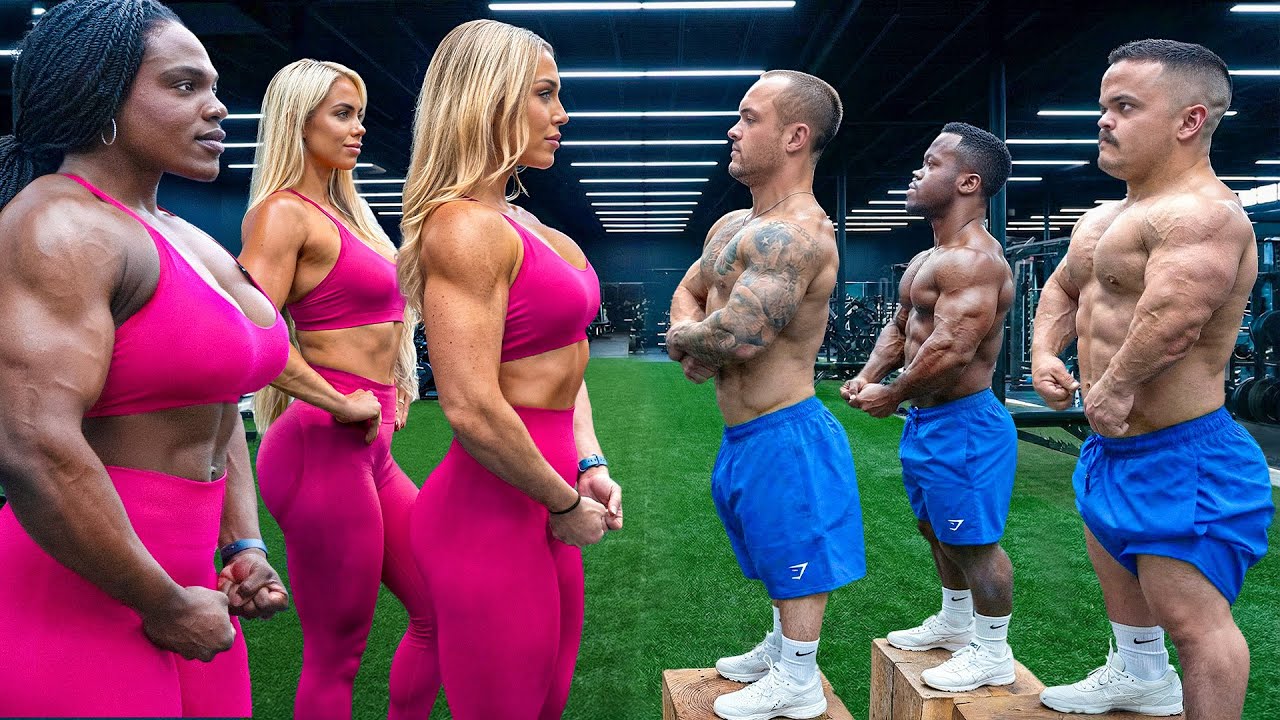
Female Giants vs. Strongest Dwarfs - (Who's Stronger?)
By Jesse James West · Fitness · 9.6M views · 18:30
The teardown in brief
What's working
- High-energy delivery matches audience expectations — the shouting and intensity are appropriate for challenge content and this creator's brand. The audio energy (94% very loud) aligns with what young fitness/competition viewers came for.
- Clear, simple concept that delivers on the thumbnail/title promise. 'Giants vs Dwarves' is visually interesting and the video immediately shows competitions testing strength. No bait-and-switch.
- Strong individual competition moments — the squat section (0:26-3:46) holds attention well with escalating weight, genuine PRs, and natural trash talk. The tiebreaker (16:51-18:09) introduces novelty after six repetitive events.
What's costing attention
- Extreme structural repetition — seven competitions with nearly identical setup/compete/winner beats. The format is established by 3:46 and then repeated six more times with no variation. This is the single biggest retention killer.
- Zero stakes persistence — the hook asks 'who's stronger?' but the video never returns to that question until the end. No running score, no 'Giants lead 3-2', no mounting tension. Each competition feels disconnected from the others.
- Energy monotony despite high intensity — 94% shouting with minimal dynamic range creates listener fatigue. Even high-energy audiences benefit from brief calm moments to create contrast and make big moments land harder.
The first 30 seconds
These are female giants and they are the world's strongest dwarves and they'll be competing in strength competitions all to find out who is stronger. [music] Starting with one rep max on the squats. We've got Maya vers Lorenzo, baby. Let's go. We're going to go plate by plate. Up and up and up. Whoever fails first. Who
Hook fires at 0:00-0:10 with the concept stated clearly ('female giants vs strongest dwarves, strength competitions') and visuals immediately show the competitors, reaffirming what the thumbnail promised. First competition begins at 0:13 with escalating stakes setup. This is strong packaging delivery — viewers know what they're getting and see it happen fast. The predicted 22% drop to 78% at 30 seconds is the mandatory packaging baseline (autoplay bounces + misclicks), not a content weakness.
Where viewers drop
4:06 — Repetition Fatigue — Middle Section (critical)
Competitions 2-6 follow identical beats: setup rules → competition starts → someone wins → trash talk → next event. By competition 3, viewers can predict the exact flow. Each segment feels like a copy-paste of the last one, just with different exercises. The pattern becomes: 'Here's the challenge... ready? GO! [shouting] Winner! Next event.' This mechanical repetition is the #1 retention killer in competition content.
Why it matters — Viewers tune out when they can predict what's coming. Even if individual moments are exciting, the overall structure feels like watching the same 3-minute video looped six times. Expect accelerating drops through this section as pattern fatigue sets in — most viewers will bail between competitions 3-5 when they realize nothing new is going to happen.
2:00 — Stakes Amnesia (critical)
After the hook sets up 'who's stronger?', the video never returns to that question until the very end. Each competition feels like a standalone segment with no connection to the overarching premise. The viewer forgets what they're watching FOR. There's no running tally, no 'Giants lead 3-2', no mounting tension toward a final answer. It's just a series of isolated wins and losses that don't add up to anything.
Why it matters — Without persistent stakes, viewers lose the thread. They might enjoy individual competitions but don't feel compelled to KEEP watching because there's no larger narrative pulling them forward. This is why people bail midway through listicle videos — if #3 doesn't connect to #4, why not just click away?
0:00 — Energy Monotony (moderate)
The audio energy data shows 94% of the video at shouting intensity (-7 to -12dB) with only 7.8dB dynamic range. Everyone is yelling constantly — during setups, during competitions, during transitions, during trash talk. There are no quiet strategic moments, no calm before the storm, no emotional contrast. It's a 18-minute sprint at maximum volume. For the first 2-3 minutes this works, but by minute 10, the shouting becomes background noise. The viewer's ears (and attention) fatigue.
Why it matters — High-energy audiences DO expect intensity, but sustained shouting without breaks isn't exciting — it's exhausting. Contrast creates impact. A whispered strategy discussion makes the next explosive competition hit harder. Without dynamic range, everything blends into a wall of noise and nothing stands out. This is why viewers describe some videos as 'too much' even when they like the concept.
3:47 — Weak Transitions — Pattern Break Opportunities Missed (moderate)
Every transition between competitions follows the same script: winner declared → brief trash talk → 'next event!' → rules explanation → go. There's no surprise, no twist, no moment where the format changes. The trash talk sections (which COULD be pattern interrupts) all sound identical. Compare the transitions at 3:46, 6:09, 8:24, 11:16, 13:35 — they're functionally interchangeable. This predictability makes the repetition problem worse.
Why it matters — Transitions are natural exit points. If a viewer finishes competition 3 and sees the exact same setup starting for competition 4, they feel safe clicking away — they've seen this already. But if the transition surprises them ('Wait, what? They're switching teams?' or 'Oh no, the loser has to...'), they stick around to see what changed.
How the video is built
- 0:00 Hook & Competition 1 - Squats — Setup of concept (giants vs dwarves) and first competition establishing the format
- 3:47 Competitions 2-4 - Repetitive Middle — G-Wagon pull, mas wrestling, deadlift gauntlet — pattern established and repeated
- 11:16 Competitions 5-6 - Pattern Fatigue — Tug-of-war and wrestling competitions — same structure continues
- 16:51 Tiebreaker & Resolution — Fireman carry tiebreaker provides novelty, dwarves win, outro
What any creator can steal
- Add persistent score tracking throughout
- Cut 2-3 competitions to tighten repetitive structure
- Insert 10-15 second calm strategy moments before competitions 3, 5, and 6
- Add format twist or surprise at 8:30 to reset pattern expectations
- Improve segment transitions with forward momentum
- For competition series, MAX five events unless you vary the format drastically. Seven identical structures is too many for any audience. Either cut the count or make events 4-7 feel completely different from 1-3 (surprise rules, format changes, twists).
More teardowns from Jesse James West
- Prisoners vs. Cops - (Who’s Stronger?)
- Living With Worlds Healthiest Family For 24 Hours
- I Investigated The Country That LEGALIZED Steroids
- Asking Celebrity Billionaires to Workout in THEIR Home Gyms
Want this on your own video?
Add your video's link and its retention graph from YouTube Studio, and Retti shows the moment viewers left and why. Your first review is free.
Run your free review