CORE HIDE AND SEEK IN OUR NEW HOUSE
By CORE · Entertainment · 2.2M views · 35:32
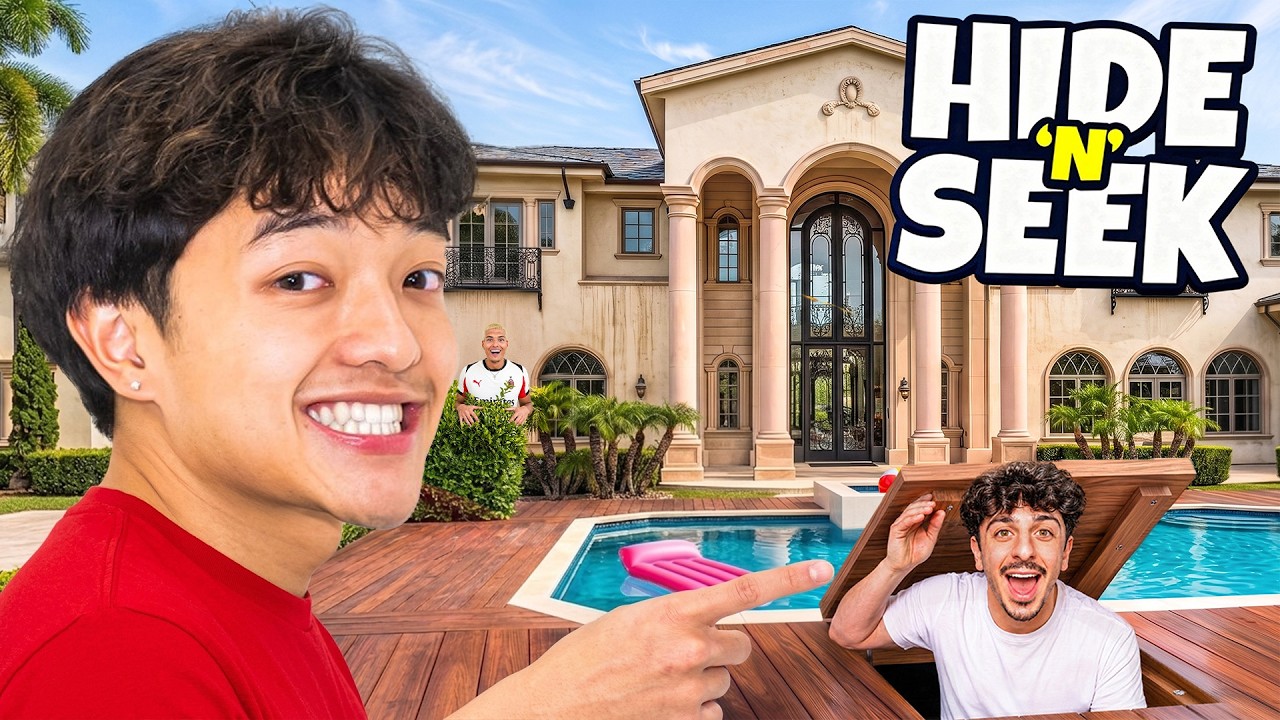
The teardown in brief
What's working
- The group chemistry is genuinely funny — the snitching negotiations (Quesan trading info for car privileges, Lacy calling pretending to be Rug) are more entertaining than the finds themselves and feel completely unscripted.
- The car find at 17:50 is the best moment in the video — two sweaty guys packed in Rug's own car, which he almost locks them in. That's the kind of organic payoff that makes challenge content worth watching.
- Audio energy is well-calibrated for the niche — 22% shouting, 45% loud, with natural oscillation. The group never sounds performatively hype, just genuinely excited.
What's costing attention
- Zero stakes are ever defined. There's no consequence for losing, no prize for winning, no punishment for being caught first. A 35-minute competition where nothing is on the line asks too much of the viewer's patience.
- The 11:00–15:00 stretch is nearly 4 minutes of searching with no find, no near-miss payoff, and no tension — the single longest dead zone in the video and the most likely dropout point.
- Round 2 is structurally identical to Round 1 (hiding phase → searching → finds → someone survives) with no escalation, new rules, or twist. The viewer has already seen this exact game.
The first 30 seconds
I got to catch you. >> What is that? >> I see Silky and someone else in his car. >> I'm down to take the risk. I'm not going to lie. >> 3 2 1. >> Y'ALL READY FOR HIDE AND SEEK? >> ALL RIGHT. IN 3 2 1 GO. >> HURRY UP. >> I'm going to the basement. >> 3 MINUTES TO HIDE. WAIT, my ankle up.
The video opens mid-chaos with shouting and a countdown at very high audio energy (-6.8dB to -10.1dB), which is appropriate for the niche — you're in the action within 17 seconds and the hide and seek concept is clear. The only miss is that no stakes are ever mentioned before the countdown starts, so the viewer knows WHAT they're watching but not WHY they should care who wins.
Where viewers drop
0:00 — No Stakes, Ever (critical)
Nobody ever says what happens if you win or lose this game. No money on the line, no punishment, no bragging rights defined, no consequence for getting caught first — nothing. You're watching a 35-minute game where you don't know why you should care who wins.
Why it matters — When there's no consequence, every find becomes just an event instead of a moment. The viewer has no reason to feel dread when Rug gets close or triumph when Lacy survives — they're just watching something happen, not a contest that matters.
11:00 — Dead Middle Search (11:00–15:00) (moderate)
Rug wanders the house for about 4 straight minutes without finding anyone. He checks rooms, says 'I don't know where they are,' ponders moving to the next area. There's no discovery, no close call, no tension — just searching. This is the single longest payoff gap in the video.
Why it matters — The viewer has been waiting since Silky was found at 6:56 for the next payoff. By 13:00 — over 6 minutes later — nothing has happened. For a high-energy audience expecting finds every 3–4 minutes, this is where the phone comes out.
26:00 — Round 2 Loses Energy Fast (26:00–29:30) (moderate)
After the incredible payoff of Lacy on the roof, Round 2 starts with another 3-minute hiding phase. The energy resets from the climax, people are just wandering and chatting about spots, and the viewer has already seen this exact setup 26 minutes ago. The cameraman pointing at the roof at 29:03 deflates the only early tension in Round 2.
Why it matters — Round transitions are the biggest viewer exit point in multi-round challenge content. The first round just peaked — Lacy was on a roof, Rug found people in his own car. Round 2 starts slower with the same hiding structure, same commentary style, and within 3 minutes the seeker is wandering the same spaces again.
33:30 — Anticlimactic Final Find (33:30–35:32) (mild)
The final 2 minutes of the video — finding Silky — ends with him literally asleep. He fell asleep hiding. It's mildly funny but doesn't deliver the explosive finish a 35-minute hide and seek video needs. The sign-off is 'Like and subscribe if you're...' mid-sentence.
Why it matters — The last 120 seconds of a 35-minute video need to deliver a satisfying conclusion. Finding someone asleep is the 'meh' version of the payoff. The video ends without a clear winner declaration, without revisiting the stakes (because there were none), and without a forward tease to keep subscribers for the next video.
How the video is built
- 0:00 Round 1 — The Hunt — Everyone hides in the new house, Rug seeks. Finds happen roughly every 3-7 minutes: Silky (~6:56), Quesan (~9:20), car duo (~17:50), Adapt (~20:44). Climaxes with Lacy surviving on the roof.
- 25:35 Round 1 Resolution — Lacy declared winner, Quesan assigned as next seeker.
- 26:00 Round 2 — The Rematch — New hiding phase, Quesan seeks. Finds happen with more snitching and negotiation. Ends with Silky found asleep — the video's final payoff.
What any creator can steal
- Add stakes before the first countdown
- Cut the 11:00–15:00 dead zone from 4 minutes to 90 seconds
- Make Round 2 feel different from Round 1
- Film a proper winner declaration outro
- Add a hider-POV split screen during all long search sections
- Decide on stakes BEFORE you film. Write them on a whiteboard, show it to camera, get group agreement. Even something small — 'loser wears a chicken suit to dinner' — is enough. Stakes cost you nothing to add and they turn every moment of the game into something the viewer is emotionally invested in.
More teardowns from CORE
Want this on your own video?
Paste any YouTube URL and Retti maps every drop, spike and plateau to the moment that caused it.
Analyse a video free