Can I Break 50 With Stephen Curry? (Electric)
By Bryson DeChambeau · Sports · 8.2M views · 1h 11m
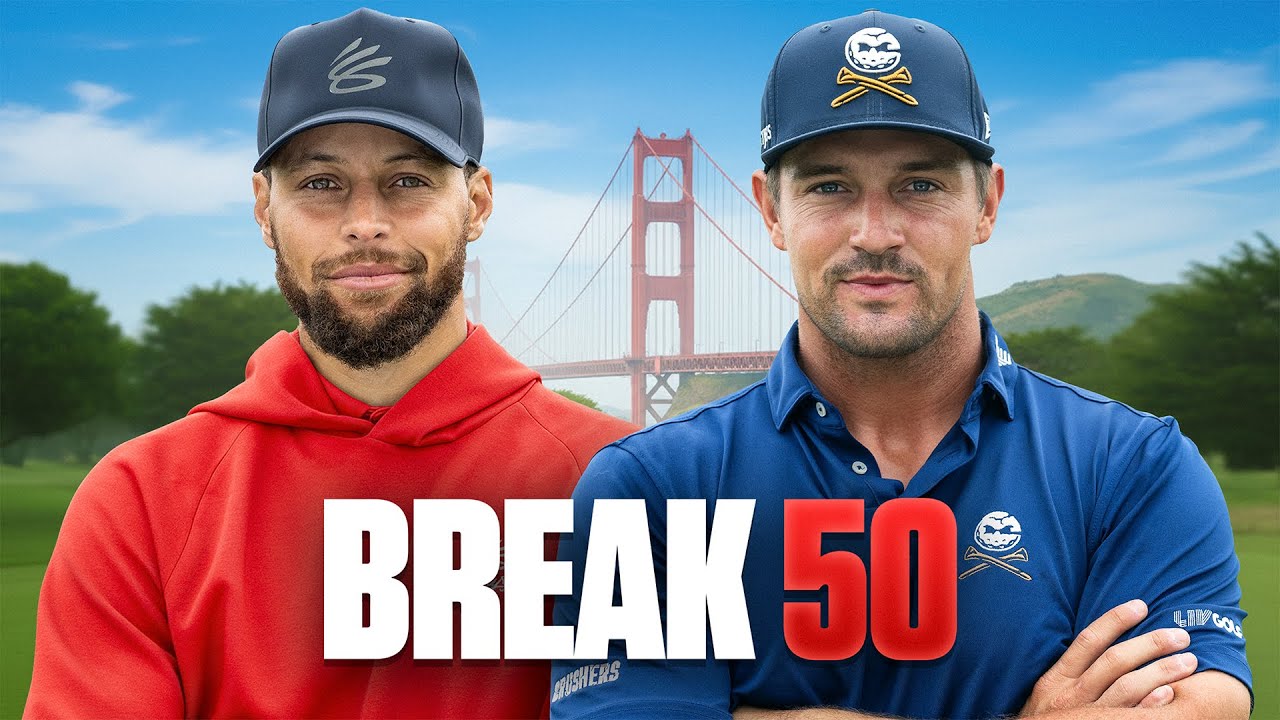
The teardown in brief
What's working
- Immediate explosive start creates investment — you eagle the first hole within 3 minutes and don't slow down. The first 25 minutes is some of the most exciting golf content possible (9 under through 5 holes). This creates massive early commitment.
- Celebrity chemistry works perfectly — Steph isn't just a guest, he's genuinely contributing. His shots match yours, his personality shines, and the banter feels authentic. The conversation about leadership, family, and basketball adds dimension beyond just golf.
- Clear stakes architecture with ongoing score tracking — the viewer always knows exactly where you stand (progress updates every hole), what you need (specific math toward 49), and how much runway is left. The final 3-hole push ('we need 2 birdies in 3 holes') creates natural climax tension.
What's costing attention
- Sponsor integration is BRUTAL — five reads in 40 minutes, with the Sportsbox and Gemini sections being full 2-3 minute commercial breaks. You're stopping the golf action at peak momentum to demo products. These need to be 80% shorter or moved to natural breaks (turn, cart rides).
- Celebration fatigue from repetitive reaction language — by the 5th eagle, 'Let's go!' and 'Oh my gosh!' start feeling automated. You need reaction variety (quiet disbelief, laughter, silence) to keep each success feeling unique.
- Conversational tangents break round flow — the personal stories (childhood golf, 2016 Finals, basketball inspiration) are interesting but they're happening mid-round when the viewer wants to see the next shot. These should be cart-ride B-roll or condensed to 60 seconds max.
The first 30 seconds
Welcome back to Break 50, the series where I try to shoot an impossible 49 in a twoman scramble team. And today we have the most requested episode ever. Stephen Curry, breaking 50. I've watched so many episodes and now it's my turn to take on the challenge with the good old Bryson. Let's go, baby. Let's go. We will be
Strong Tier 1 delivery. Opens with series branding ('Welcome back to Break 50'), immediately reveals the guest ('Stephen Curry'), and establishes the challenge stakes ('shoot an impossible 49 in a two-man scramble'). The packaging promise (Bryson + Steph playing golf) is visually and verbally confirmed within 16 seconds. Curry's energy ('breaking 50, I've watched so many episodes, now it's my turn') reaffirms that this is THE episode fans requested. No confusion about format or guest. The 22% drop is packaging validation (autoplay, misclicks, thumbnail mismatch) not hook failure.
Where viewers drop
1:02 — Sponsor Overload — Five Reads in 40 Minutes (critical)
You have FIVE sponsor integrations in the first 40 minutes: Bucked Up (1:03 and 19:42), Gentleman's Cut (15:31), Sportsbox (23:09-25:09 — a brutal 2-minute section), and Gemini (33:56-36:45 — another massive 2:50 block). The Sportsbox and Gemini reads aren't even trying to hide — they're full commercial breaks that stop the golf action cold. The viewer came to watch you and Steph play golf, not sit through product demos.
Why it matters — Each sponsor read causes a 3-8% retention drop. You've stacked five of them before the turn. The Sportsbox AI roast bit (23:09-25:09) is 2 minutes of standing around talking about swing analysis when you're 11 under and momentum is peak. The Gemini read (33:56-36:45) is nearly 3 minutes of tech talk right when you're approaching the critical back nine. These aren't just speed bumps — they're roadblocks. Viewers who survived the hook are bailing during these sections because you've broken the flow of the round.
7956:00 — Conversational Context Dumps — Breaking Momentum (moderate)
Multiple times throughout the round, you stop the golf action for extended personal conversations: leadership philosophy (8:00-10:00), childhood golf stories (32:00-34:00), basketball inspiration (44:00-46:00), shoe design process (58:00-59:00). These are interesting stories, but they're happening MID-ROUND when the viewer wants to see the next shot. The stories pull focus away from the challenge at hand. At 9:00-10:00, you're talking about the 2016 Finals loss for 2+ minutes while standing on a tee box. The golf has completely stopped.
Why it matters — Enthusiast golf audiences have patience for conversation, but not when it interrupts the action flow. These sections would work perfectly as cart-ride B-roll (visuals of you driving between holes while audio plays over it). Instead, they're static moments where two guys are standing around talking while the viewer is thinking 'okay, cool story, but what did you shoot on this hole?' The back-nine conversation sections (45:00-47:00, 62:00-63:00) feel especially long because the urgency is highest — you need birdies.
14500:00 — Repetitive Celebration Language — Diminishing Returns (moderate)
By the 5th or 6th eagle/birdie, the celebration reactions start sounding identical: 'Let's go!', 'What is happening?!', 'Oh my gosh', 'That's unbelievable', 'What are we doing?'. The audio energy stays VERY_LOUD (shouting/intense) for almost every shot through the front nine. At 14:00-19:00, you make 5 consecutive birdies/eagles and the reaction to each is structurally identical: disbelief → celebration → score update → 'we've never done this before' comment. The pattern becomes predictable.
Why it matters — Celebration fatigue sets in. The first eagle at 2:50 ('Oh my god, we're off to a great start!') hits hard because it's unexpected. The fifth eagle at 18:00 gets the same reaction but feels less impactful because the viewer has heard this exact sequence 4 times already. High energy is appropriate for this content, but CONSTANT peak energy with no contrast creates numbness. The viewer starts tuning out the celebrations because they know what's coming. This is most dangerous from 10:00-25:00 when you're stacking success after success with mechanically similar reactions.
30000:00 — Mid-Video Energy Sag — Conversational Lulls (mild)
From 30:00-45:00, the audio energy drops into more NORMAL conversational range for extended stretches (30:21-31:00, 31:33-32:54, 37:18-38:42). You're talking about golf strategy, reading putts, discussing club selection. These are necessary moments, but they create noticeable pacing contrast after the explosive front nine. The conversation at 32:00-34:00 about Steph's childhood golf experience is interesting but it's 2 minutes of calm storytelling right in the middle of the round when you're trying to maintain momentum toward the goal.
Why it matters — For a 71-minute video, you NEED pacing variety — the viewer can't sustain peak excitement for over an hour. But the transition from VERY_LOUD celebration mode (front nine) to NORMAL conversational mode (middle section) is jarring. It feels like two different videos spliced together. The middle section risks feeling like 'filler golf' between the hot start and the dramatic finish. Viewers who loved the explosive energy of the first 25 minutes might disengage when it shifts to standard golf commentary for 15-20 minutes.
How the video is built
- 0:00 Explosive Start — Hook through hole 5 — 9 under par, incredible hot streak establishes stakes and chemistry
- 25:00 Front Nine Completion — Holes 6-9, finishing front nine at 14 under — maintaining momentum
- 40:00 Back Nine Push — Holes 10-15 — staying on pace, building toward final push
- 60:00 Climax Run — Final 3 holes — specific math (need 2 birdies), maximum tension, dramatic finish on 18th green
What any creator can steal
- Cut sponsor read duration by 70% or move to natural breaks
- Vary celebration reactions to prevent pattern recognition
- Move conversational tangents to cart rides or condense to 60 seconds
- Add visual variety to compensate for format repetition
- Compress middle holes into montage when outcomes are predictable
- Establish sponsor placement rules BEFORE filming: no sponsor reads during active golf on tee boxes or greens, all integration happens during cart rides/walking shots, max 30 seconds per read, or one batched montage at the turn. Make it a non-negotiable production rule. The sponsors will survive — your retention won't if you keep stopping the action for 2-3 minute product demos.
More teardowns from Bryson DeChambeau
- 1 Pro vs 5 Average Golfers (Not Even Close)
- Can I Break a Public Course Record in One Try? (I Lost My Mind)
- Lose a hole, you get punished... (brutal)
- 1 Pro Golfer vs 5 Kids (They Were So Good)
Want this on your own video?
Add your video's link and its retention graph from YouTube Studio, and Retti shows the moment viewers left and why. Your first review is free.
Run your free review