$1 Billion To Forgotten: How Dollar Shave Club Lost Everything
By Logically Answered · Business · 1.4M views · 15:31
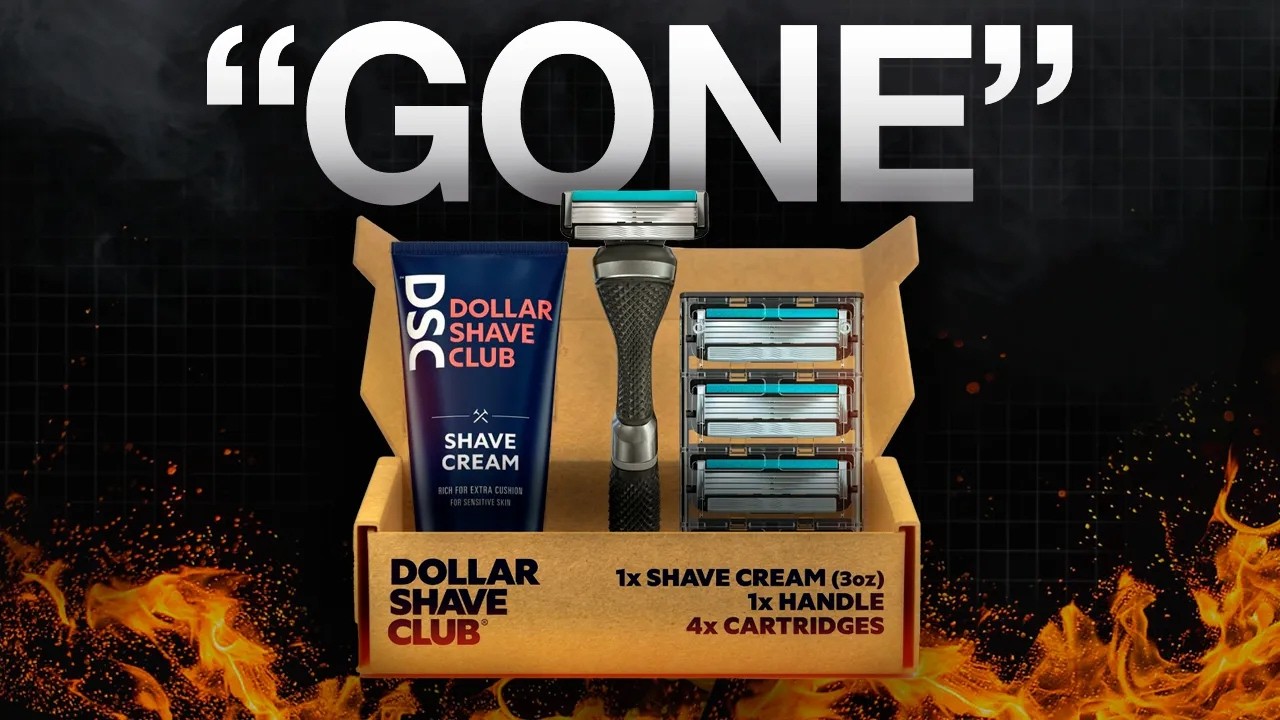
The teardown in brief
What's working
- The 'broken from the start' hook at 0:47 plants a thesis that the entire video then proves — every chapter adds a new layer of evidence, so the viewer feels they're watching a theory confirmed rather than a story told
- Specific numbers and quotes land as mini-payoffs throughout: $4,500 ad budget, $1 billion sale, 47% vs 23% online market share, Unilever's written admission — these are the receipts that make the argument feel forensic rather than opinionated
- The customer complaint section (10:51-11:21) is the emotional peak — real human voices expressing betrayal after years of loyalty ('cancelled my 6-year-old subscription today') turn an abstract business failure into something the viewer actually feels
What's costing attention
- Stakes are never explicitly restated after the hook — the viewer understands a billion-dollar brand failed, but the 'what does this mean for businesses like this?' frame goes underground after Chapter 1 and only resurfaces in the conclusion
- The mid-video subscribe ask at 10:15 is placed at the worst possible moment: a chapter boundary after a heavy decline sequence, with the payoff of Chapter 3 still ahead
- The conclusion pivots from emotional story to abstract business theory when it should anchor the lesson back to the specific people and numbers the viewer just spent 15 minutes learning
The first 30 seconds
You've probably seen this ad. Dollar Shave Club might've been the biggest Direct to Consumer brand. So, let's look at their ads today. This brand was everywhere. It reshaped the overpriced razor market. It bent Gillette into lowering prices. Customers loved it. So, how did it go from this to this? Unfortunately, Dollar
Hook fires fast — the 'you've probably seen this ad' opener directly references what viewers clicked for, and 'broken from the start' at 0:47 plants the thesis immediately. Strong Tier 1 delivery despite the mandatory packaging bounce.
Where viewers drop
10:16 — Mid-Video Subscribe Ask (critical)
Right at the pivot into Chapter 3 — the most analytically rich section about Nexus and the 'managed absurdity' strategy — the creator hard-stops to ask for a subscribe. Seven seconds of pure exit permission at the exact moment you've built the most momentum.
Why it matters — Viewers who stayed through the Unilever failure arc are now being told to pause their experience and go do something else. A chunk of them will take that offer.
1:28 — Context Dump Before First DSC Story Beat (moderate)
After promising 'the rise and strange fall,' the video spends nearly 110 seconds explaining the razor industry's margin structure, Gillette's handle-and-cartridge model, P&G's $57 billion acquisition, and retail barriers — before Dubin or DSC's actual story begins. Viewers clicked for the Dollar Shave Club story, not a market primer.
Why it matters — The 'broken from the start' hook created urgency. This section delays the payoff on that urgency for almost two minutes. Viewers who aren't already interested in business mechanics are most at risk here.
14:34 — Generic Business Lesson Conclusion (mild)
After a strong emotional landing on DSC's decline, the video pivots to a 29-second abstract business school lecture: differentiation vs price competition, why price competition is not recommended. It's accurate but feels textbook, disconnecting from the concrete story the viewer just watched.
Why it matters — Viewers who made it this far are invested in DSC as a story. The lesson they want is 'here's the specific thing that killed this specific brand' — not a Porter's Generic Strategies reminder. The tonal shift from story to lecture gives permission to click away before the Grubhub tease fires.
12:40 — Ad-Viewing Transcript Gap (mild)
Transcript coverage thins from 12:40 to 13:16 — a 36-second stretch where the 'Order of the Blade' workshop ad is presumably being shown. The verbal narration then returns with '600 views' as the verdict. Without knowing what the viewer is watching here, there's a structural gamble on the visual asset carrying the moment.
Why it matters — If the ad itself is as underwhelming as the creator describes, the viewer may agree — but without commentary guiding their reaction, some will simply sit through a bad ad rather than a comedic framing of a bad ad. The creator's voice is the value, not the ad itself.
How the video is built
- 0:00 Hook + Thesis Plant
- 0:59 Chapter 1 — The Rise
- 6:37 Chapter 2 — The Unilever Trap
- 10:16 Chapter 3 — Managed Absurdity
- 14:14 Grand Payoff + Business Lesson
What any creator can steal
- Kill or move the Chapter 3 subscribe ask
- Compress the razor market context before Dubin appears
- Add a stake reminder at the $8 billion Gillette write-down moment
- Anchor the conclusion lesson back to the specific DSC story
- Add creator voiceover during the workshop ad clip
- Plant a micro-loop at the end of each chapter that teases Chapter N+1 as a question, not a chapter title. 'But Unilever was about to make a different kind of mistake' is more compelling than 'Chapter 2: Cost of Conglomerates.'
Want this on your own video?
Paste any YouTube URL and Retti maps every drop, spike and plateau to the moment that caused it.
Analyse a video free